

Home Window Repair Near Me in Dallas: Fast, Honest Residential Glass Repair
By Adil Charahil, Lead Author and Technical SEO Specialist, Windows And Doors Repair LLC | Updated for Dallas, Texas Homeowners
If you have ever stood in your living room on a July afternoon and felt actual heat radiating off your own window glass, you already understand something most homeowners outside Texas never have to think about: a Dallas window is not a passive piece of the house. It is a component under constant mechanical and thermal stress, and it is fighting a battle every single day against triple digit heat, sudden spring hailstorms, and a foundation that shifts more than most people realize thanks to the Blackland Prairie clay sitting underneath half the city. When that battle starts going badly, you see it show up as a foggy pane, a draft near the sash, or in the worst cases, a cracked or shattered piece of glass that needs attention right away.
This guide exists because too many Dallas homeowners searching for home window repair near me get pushed straight into a full window replacement quote before anyone has actually diagnosed what is wrong. Sometimes a full replacement genuinely is the right call, particularly when a frame has warped beyond adjustment or the glass has shattered outright. But a large share of the window complaints we see across Uptown, Highland Park, Lakewood, and the rest of the metro turn out to be fixable at the component level: a resealed perimeter, a replaced glass unit, or a repaired sash, all without tearing out the entire frame. Our approach is diagnostic first, always, because that is what actually saves homeowners money and prevents a small problem from becoming a bigger one.
In the sections below, we will walk through exactly why Dallas is such a demanding environment for residential window glass, how to diagnose a failing seal or a stress fracture yourself before ever picking up the phone, when a targeted repair makes more sense than a full replacement, and what to expect in terms of cost and timeline. Whether your home is a historic wood sash property in the M-Streets or a newer vinyl framed build out in Far North Dallas, the physics and the diagnosis process described here apply directly to your situation.
Section 1: The Physics of Window Damage in Dallas
To understand why Dallas windows fail at a noticeably faster rate than windows in more temperate parts of the country, you have to look at what is physically happening inside a modern double pane insulated glass unit, or IGU, during a typical North Texas summer.
A double pane IGU is a sealed system: two panes of glass held a fixed distance apart by a spacer bar, with the cavity between them filled with argon gas specifically because argon conducts heat less efficiently than ordinary air, giving the window a meaningfully lower U-factor. That sealed cavity depends on a dual sealant barrier, a primary polyisobutylene seal that keeps the argon in and moisture out, and a secondary structural silicone seal that holds the physical assembly together under stress. When a west or south facing Dallas window absorbs direct sun for hours during a 100 degree plus stretch, which the city routinely sees for weeks at a time every summer, the argon gas inside that sealed cavity expands significantly. Once the sun drops and the glass cools rapidly in the evening, that same gas contracts again. Building scientists call this repeated cycle solar pumping, and it generates a genuine, cyclical pressure differential across the primary seal every single day, essentially working it like a tiny bellows, thousands of times over the life of the unit. Over enough cycles, this accelerates micro fracturing in that primary seal well before any fogging becomes visible to the eye.
Underneath all of this sits a second, equally important factor: the ground itself. The Blackland Prairie clay soil found across much of Dallas and its northern suburbs is highly expansive, meaning it swells considerably when saturated by rain and shrinks back down during our long dry summer stretches. This cycle repeats every year, and it transmits real, measurable movement up through a home’s foundation and into the framing around every window opening. Even a small shift, often just a fraction of an inch, is enough to force a window frame slightly out of square. Since an IGU was never engineered to flex, that structural stress concentrates exactly at the weakest point in the assembly, the primary seal, compounding the damage already being caused by solar pumping and UV degradation.
It is also worth separating two distinct types of glass failure that get confused constantly: hail damage and thermal stress fractures. Hail impact produces a very specific, localized crack pattern, usually a point of impact with radiating cracks outward, and it happens instantly during a storm event. Thermal stress fractures look different: a long, often straight crack that develops gradually, usually starting at the edge of the glass where it is held in the frame, caused by uneven heating across the pane (for example, one section shaded by a tree branch while the rest bakes in direct sun). Both are real risks in North Texas given our severe spring hailstorm season and extreme summer heat cycling, but they call for slightly different diagnostic approaches and, in some cases, different insurance considerations.
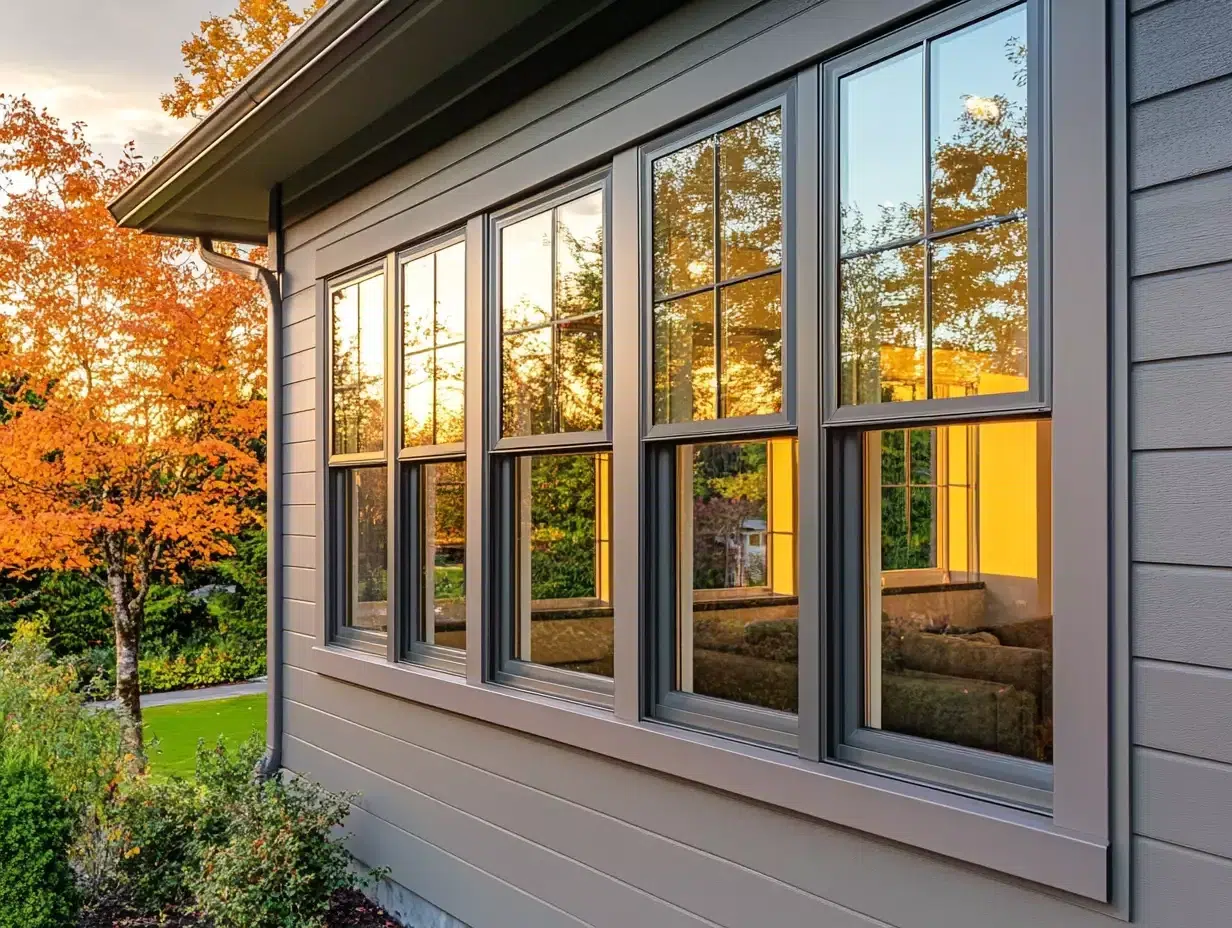
Direct afternoon sun on a west facing Dallas window is exactly the exposure that drives solar pumping and accelerates seal fatigue.
Section 2: How to Diagnose Window Failures (Self-Inspection Guide)
Before calling anyone, a homeowner can gather genuinely useful diagnostic information with nothing more than a few minutes and a little patience.
Fog, condensation, and mineral streaking between the panes is the clearest sign of a failed IGU seal. This is different from ordinary surface condensation, which appears on the interior or exterior face of the glass and clears as temperature and humidity shift throughout the day. Fog trapped between the panes, on the other hand, will not wipe away no matter what you try, because it is sealed inside a cavity you cannot physically reach. Over time, that trapped moisture can leave faint white or chalky mineral deposits on the interior glass surfaces, a telltale sign the desiccant inside the spacer bar has become fully saturated and can no longer manage incoming humidity.
Convective drafts versus conductive heat transfer is a distinction worth understanding, since they point toward two completely different repairs. Conductive heat transfer through an intact IGU is predictable and follows the glass unit’s rated U-factor, it is simply heat passing through the glass itself. A convective draft, by contrast, means air is physically moving through a gap, usually at the perimeter where the frame meets the wall, or along a worn sash weatherstrip, and this kind of leak behaves unpredictably, getting worse with wind pressure and worse still while your HVAC system is actively running and creating its own pressure differential across the house.
The Dallas Homeowner Smoke and Hand Test
With your air conditioning running, hold a lit incense stick or a smoke pencil slowly along the interior sash and frame perimeter. Smoke that visibly deflects or gets pulled sideways reveals an active convective air leak, even at points where no gap is visible to the naked eye. For heat transfer specifically, hold the back of your hand about an inch from the center of the glass on a hot afternoon, then move it to the frame edge. A noticeable temperature jump between the two points suggests the seal or frame is compromised right at that location, not just the glass itself.
Section 3: Repair vs Replacement Decision Matrix
Once you know which type of failure you are dealing with, the correct fix depends entirely on where that failure originated. This is exactly where homeowners most often get pushed toward a more expensive option than the situation actually requires.
Perimeter caulking and weatherstripping addresses convective leaks at the frame to wall junction or along a moving sash. This is a targeted, relatively low cost fix: stripping old, degraded sealant down to a clean substrate and applying a fresh bead of quality silicone or polyurethane sealant. It does nothing for a fogged IGU, since that failure sits inside a sealed cavity the caulking simply cannot reach.
IGU glass unit replacement is the correct fix once the primary seal inside the sealed cavity has failed. This involves replacing only the glass unit within the existing frame, provided that frame remains structurally sound, square, and free of rot or warping. It is a precise job requiring exact measurements and careful handling, but it is a fraction of the cost and disruption of tearing out an entire window and frame assembly.
| Failure Type | Symptoms | Recommended Solution | Cost Factor |
|---|---|---|---|
| IGU primary seal failure | Persistent fog, interior haze, mineral streaking | Glass unit replacement, frame reused | Low to moderate |
| Perimeter caulking failure | Draft near frame edge, cracked exterior caulk line | Strip and reseal with silicone or polyurethane | Low |
| Sash weatherstripping wear | Draft only when window is closed, whistling in wind | Weatherstripping replacement | Low |
| Hail impact crack | Point of impact with radiating cracks | Emergency glass replacement | Moderate |
| Frame warped from foundation shift | Difficult to open or close, visible gap at one corner | Frame realignment or, in severe cases, replacement | Moderate to high |
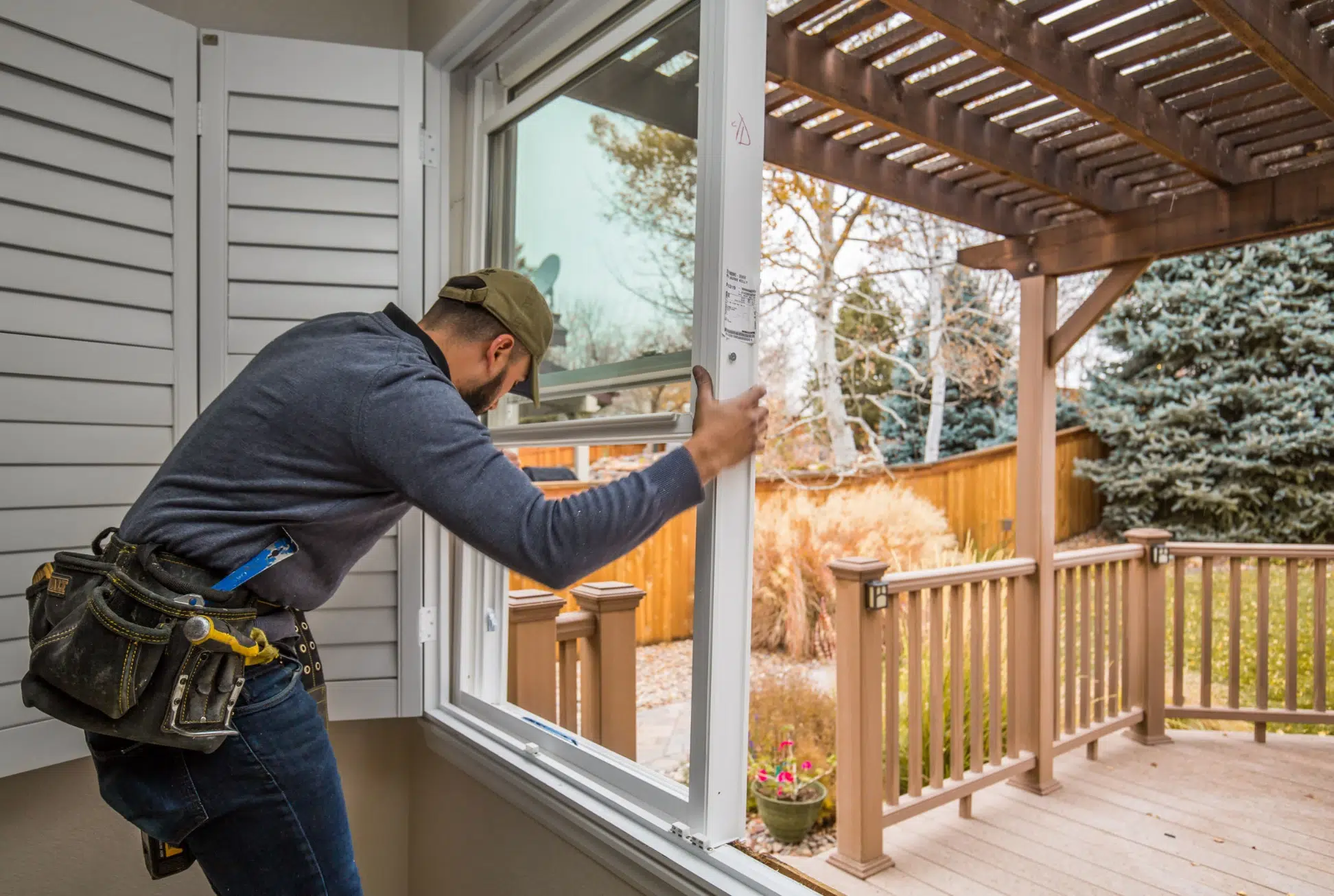
A proper diagnosis, checking the frame, the seal, and the glass separately, is what determines whether a repair or a full replacement is actually needed.
Section 4: DIY Window Fixes vs Professional Glass Replacement
There is real, worthwhile DIY work available here, and knowing where it stops matters just as much as knowing where it starts. Perimeter caulking is genuinely approachable: removing old, cracked sealant, cleaning the substrate thoroughly, and applying a fresh bead of quality silicone is well within reach for a patient homeowner with the right tools. Weatherstripping replacement along a sash is similarly manageable, provided you can source the correct profile for your specific window system.
Where DIY runs into real trouble is anything involving the sealed glass cavity itself. Drilling a small hole into a fogged IGU to release trapped moisture, a fix that occasionally circulates online, permanently destroys whatever remains of the argon fill, introduces new points of failure, and in many cases risks cracking the tempered glass outright. Aftermarket defogging kits marketed to consumers rarely restore true optical clarity and almost never restore the unit’s original thermal performance, since the desiccant’s absorption capacity cannot be reset once it has been saturated. Insulated glass units are precision manufactured with specialized sealing equipment that simply is not available at the consumer level, and a proper replacement requires exact measurements, careful handling of a heavy glass unit, and correct reseating to avoid introducing a new perimeter leak while fixing the original problem.
Section 5: Neighborhood-Specific Window Maintenance in Dallas
Historic wood sashes in Lakewood and the M-Streets present a specific challenge: original wood framing, sometimes retrofitted with modern insulated glass over the decades, expands and contracts with humidity in ways vinyl and aluminum frames simply do not, and these older frames tend to be more susceptible to the foundation shift issues common across older Dallas construction. Regular perimeter seal checks and prompt attention to any sash sticking or gapping go a long way toward preserving these original frames rather than needing a full historic window replacement.
Modern vinyl IGUs in Uptown and Far North Dallas handle foundation movement somewhat better structurally, but they are not immune to solar pumping or UV related seal fatigue, particularly on unshaded south and west facing exposures common in newer, more open developments. Homeowners in these areas tend to see IGU seal failure as the dominant issue rather than frame warping.
Foundation stress in Lake Highlands and Oak Cliff tends to show up as out of square sashes and difficulty opening or closing windows, a direct result of the Blackland Prairie clay cycling through wet and dry seasons beneath these established neighborhoods. Homes in Preston Hollow and Bishop Arts District see a mix of both issues, given the range of construction eras represented across those areas, from older custom picture glass installations to more recently updated aluminum sliders.
Across every one of these neighborhoods, the underlying lesson is the same: the specific age and material of your window frame changes what kind of failure you are most likely to see first, but it does not change the fundamental physics at play. A single hung vinyl window in a newer Far North Dallas build and a wood sash window original to a 1930s Lakewood bungalow are both fighting the same solar pumping cycle and the same clay soil movement underneath the foundation. What changes is how quickly each material responds to that stress, and how visible the early warning signs are. Vinyl and aluminum frames tend to hide frame level movement longer, since they are more rigid, which sometimes means the first visible symptom is a fogged IGU rather than a sticking sash. Wood frames, by contrast, often announce foundation related stress earlier through a sash that suddenly sticks or a visible gap opening at one corner, well before any glass level seal failure becomes noticeable. Knowing which pattern applies to your home’s construction era genuinely helps you catch a problem while it is still a small, inexpensive fix rather than letting it develop into a full frame or glass replacement.
Section 6: Frequently Asked Questions
Should I replace the whole window or just the glass?
If your frame remains square, free of rot, and structurally sound, replacing just the glass unit is almost always sufficient and considerably less expensive than a full window replacement. Full replacement becomes necessary only when the frame has warped beyond adjustment, suffered water damage, or when a homeowner is intentionally upgrading their entire home’s glazing system for better performance.
Why does my glass fog up only on hot Dallas afternoons?
If fogging genuinely comes and goes with the temperature, it is more likely surface condensation from a humidity differential rather than a true internal seal failure, though it is still worth monitoring. Fog from an actual failed IGU seal stays constant between the panes regardless of the time of day or outdoor temperature, since it reflects moisture trapped permanently inside a sealed cavity rather than a surface level effect.
How do Dallas hail storms affect seal integrity before the glass shatters?
Even a hail impact that does not fully crack a pane can transmit enough shock to the spacer bar and sealant to create micro fractures in the primary seal, meaning a window can appear undamaged after a storm but develop fogging or a seal failure weeks or months later. It is worth having windows inspected after any significant hail event, even if the glass itself looks fine at first glance.
What is the average repair timeframe and cost structure in Dallas?
Perimeter resealing and weatherstripping replacement are typically completed in a single visit, often within an hour or two per window. Glass unit replacement for standard sizes can often be handled same day if the unit is in stock, while custom sized or specialty glass may take several days to a couple of weeks to fabricate. Emergency home window glass repair in Dallas, for a cracked or shattered pane, is generally prioritized for the same or next business day. An honest, in person inspection remains the only reliable way to get an accurate cost for your specific window and failure type.
Whether you are dealing with a fogged pane in Highland Park, a drafty historic sash in the M-Streets, or a hail cracked window out in Lake Highlands, the fix is almost always more targeted and more affordable than it first appears. Our team brings a diagnostic first approach to every visit, and if you have been searching for home window repair near me in Dallas, we are ready to give you a clear, honest assessment before recommending any repair or replacement.

About The Author: Adil Charahil
Adil Charahil is the Lead Author and Technical SEO Specialist for Windows And Doors Repair LLC. He focuses closely on analyzing data from Google Analytics and Search Console to develop optimization strategies, resolve structural technical layout errors, and improve WordPress websites to offer the highest levels of digital clarity and visibility for home service clients across Texas.
Get Your Dallas Window Diagnosed the Right Way
Call +1 281 595 0406
Serving Uptown, Highland Park, University Park, Lakewood, Preston Hollow, Bishop Arts District, Lake Highlands, Far North Dallas, Oak Cliff, and the M-Streets. Reach us anytime at contact@windowsdoorsrepair.com.
