
Emergency Residential Window Glass Replacement in Houston: Fast, Safe, and Structurally Sound
A shattered window at 2 AM during a Gulf Coast storm is not a maintenance issue you schedule for next week. It is an active structural breach: wind-driven rain saturating your interior walls, the Houston humidity pushing condensation into exposed framing cavities within hours, and an unsecured opening that invites far worse than weather. The instinct to duct-tape a plastic sheet over the frame and wait until morning is understandable, but in Greater Houston’s climate, every hour of delay compounds the damage in ways that extend far beyond the glass itself. This guide gives Houston homeowners the technical information they need to act decisively, assess the real scope of the problem, and connect with a response team that treats glass emergencies with the urgency they demand.

Why Emergency Window Repairs Cannot Wait in Greater Houston
Houston’s climate context separates it from virtually every other major American metro when it comes to window failure consequences. The combination of sustained Gulf Coast humidity (averaging 75% or higher year-round), summer temperatures that hold above 95°F for months at a stretch, and a hurricane season that delivers Category-level wind loads to residential glass makes a broken window here a cascading problem rather than a simple repair.
The security dimension is immediate and unambiguous. A compromised window opening, even partially boarded, reduces forced-entry resistance to near zero. In residential neighborhoods across Houston proper, The Woodlands, and Sugar Land, that vulnerability cannot be left open overnight. Beyond security, the thermal performance collapse is measurable: a standard 36″ x 48″ double-pane window that loses its glass assembly allows unconditioned air to enter freely. In July in Houston, that means your HVAC system is now conditioning outdoor air at 95°F and 80% relative humidity, adding estimated load equivalent to running a second air conditioning system continuously.
There is also a structural moisture argument specific to the Houston area. Many neighborhoods in Pearland, Spring, and Cypress sit on expansive clay subsoils similar to those found across the Texas coastal plain. When wind-driven rain enters a breached window opening and contacts wall framing, the moisture absorption begins to affect the dimensional stability of the studs. In a home already managing foundation micro-movement from soil expansion cycles, introducing localized moisture loading to the framing accelerates differential movement at the window rough opening, making the eventual re-installation of a replacement unit more technically complex and costly.
For professional window glass replacement in Houston that addresses both the immediate breach and the downstream structural risk, response time is the critical variable. The protocols below are designed around that priority.
Single-Pane vs. Double-Pane Glass Emergencies: A Technical Comparison
The repair protocol, sourcing timeline, and interim safety measures differ substantially depending on whether the failed unit is a single-pane assembly or a double-pane insulated glass unit (IGU). Understanding the distinction helps homeowners communicate accurately with technicians and set realistic expectations for resolution timelines.
| Glass Assembly Type | Emergency Complexity | On-Site Repair Protocol |
|---|---|---|
| Single-Pane Annealed Glass | Immediate Physical Hazard: large, sharp shards with irregular fracture patterns; no safety film in most pre-1990 Houston homes | Full shard extraction using heavy-duty glazing pliers; perimeter channel cleaning; same-day tempered replacement glass cut to dimension from regional glazing stock; dry-set with silicone and back-bedding compound; typically completable within 2 to 4 hours of technician arrival |
| Double-Pane Insulated Glass Units (IGUs) | Seal and Efficiency Failure: even a crack in one lite compromises the argon fill and the desiccant spacer, leading to fogging and thermal bridging; structural integrity of the remaining lite may be deceptive | Careful removal of both lites as a unit; spacer bar and desiccant strip inspection; custom IGU fabrication order if non-standard dimensions (typically 1 to 3 business days); interim board-up with rigid foam insert for thermal continuity; Low-E coating matched to original specification on installation |
| Tempered Safety Glass (Patio Doors and Large Openings) | Total Disintegration Hazard: tempered glass shatters into thousands of small fragments that penetrate floor coverings, HVAC return vents, and wall cavities | HEPA vacuum protocol across a minimum 10-foot radius; track inspection for embedded fragments before any new panel is set; shattered patio door glass sourcing from regional tempered fabricators, typically same-day for standard sizes; track and roller assessment before new glass panel installation |
| Laminated or Impact-Rated Glass (Hurricane Zones) | Moderate: laminated interlayer holds shards in place but structural integrity is fully lost; interlayer can de-bond from frame over time if left in place | Scored removal of laminated assembly in controlled sections; frame inspection for impact deformation; replacement with impact-rated laminated unit to maintain insurance compliance in coastal Houston jurisdictions including Galveston County-adjacent areas |
Thermal Stress Fractures: A Houston-Specific Failure Mechanism
Not every broken window in Greater Houston is the result of storm impact or a physical strike. A significant percentage of residential glass failures in this market are thermal stress fractures, a failure mode that is systematically underdiagnosed because the crack pattern is distinct from impact damage and its origin is invisible to the homeowner.
Thermal stress fractures originate at the glass edge, typically where the pane contacts the frame’s glazing channel. In Houston’s climate, a south or west-facing window can experience a surface temperature differential of 80 to 100 degrees Fahrenheit between the center of the pane (heated by direct solar radiation) and the edge of the pane (shaded and cooled by the frame). This temperature gradient creates tensile stress at the glass edge. When that stress exceeds the glass’s modulus of rupture, typically around 6,000 to 7,000 PSI for standard annealed float glass, the fracture initiates at the edge and propagates at a roughly 90-degree angle to the glass surface, with characteristic right-angle branching.
Houston homes built between 1970 and 1995 are particularly susceptible. Many of these properties have original aluminum frames with minimal thermal break design, meaning the aluminum directly conducts exterior heat to the glass edge at high efficiency. When a home’s landscaping matures and begins shading portions of a window while leaving others exposed, the differential heating condition worsens, and thermal crack risk increases with the home’s age rather than decreasing. Proper window screen repair services, including installation of solar-rated exterior screens with 80 to 90% UV blockage, directly reduces this thermal differential by intercepting solar radiation before it reaches the glass surface. This is not an aesthetic upgrade in the Houston context; it is a structural longevity measure for glass assemblies in full southern exposure.
Foundation Shifting and Its Effect on Window Glass Integrity
Houston’s Gulf Coast clay soils share the expansive plasticity characteristics of the Blackland Prairie soils further north, though the local geology adds a complicating factor: many Houston-area neighborhoods sit on ancient flood-plain deposits with variable compaction. When the region experiences its characteristic alternation of drought and heavy rainfall (or tropical systems that deliver 10 to 20 inches of rain over 48 hours), the volumetric change in the underlying soil translates directly into slab movement.
Slab movement racks door and window rough openings out of plumb. When a window rough opening racks, the glass pane within it is subjected to racking stress transmitted through the glazing channel. Standard residential glass does not have meaningful racking resistance. When the frame distorts sufficiently (often as little as 1/4 inch of diagonal deflection in the rough opening), the glass cracks along a diagonal stress line, or the seal between the IGU spacer bar and the glass breaks, initiating the fogging and condensation sequence that indicates seal failure even without visible cracking.
This failure pattern recurs seasonally in neighborhoods including Memorial, Meyerland, and sections of Pearland and League City that experienced significant soil saturation events in recent years. A glass replacement that does not address the frame plumb condition will fail again, often within one to two seasonal cycles. Proper emergency glass replacement in these neighborhoods requires frame squaring assessment as part of the diagnostic protocol, not just glass sourcing and installation.
Our Rapid-Response Window Repair Workflow
The following workflow applies to all emergency residential glass replacement calls in the Greater Houston service area, from The Woodlands in the north to Pearland in the south, and from Katy in the west to the Houston Ship Channel corridor.
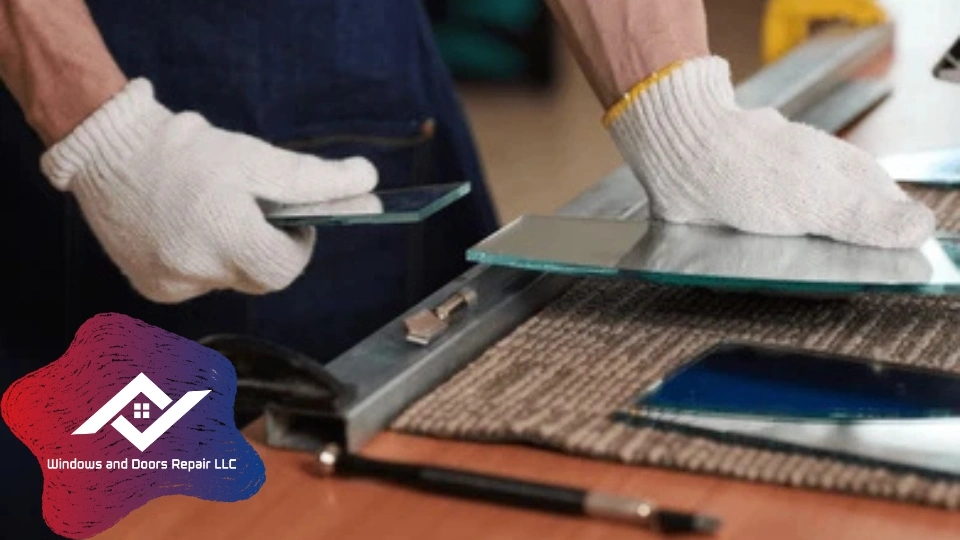
- Emergency Board-Up and Shard Clearance: Technicians arrive with rigid foam board, heavy-duty polyethylene sheeting, and HEPA-capable vacuum equipment. The priority on arrival is containment: stopping air and water infiltration, removing all glass fragments from the immediate area including floor coverings and HVAC return grilles, and securing the opening against wind pressure with a framed temporary closure that provides actual structural resistance rather than just visual coverage. For shattered patio door glass specifically, shard penetration into floor tracks and wall cavities is documented and cleared before any temporary closure is installed.
- Precision Measurement and Seal Inspection: Every dimension of the rough opening and existing frame is measured with calibrated steel tape, not laser distance tools, which can produce errors at oblique angles common in racked frames. The frame is checked for plumb on both jambs and level at the sill and head. Any deviation beyond 1/8 inch is documented and discussed with the homeowner before glass sourcing begins, because the replacement glass specification may need to account for the corrected frame dimension after shimming.
- Same-Day or Expedited IGU Glass Sourcing: For standard residential pane sizes common in Houston-area construction (typically 24 to 36 inches wide and 36 to 60 inches tall), same-day sourcing from regional glazing distributors is achievable in most cases. Non-standard sizes, impact-rated assemblies, or specialty Low-E coatings matching original specifications typically require one to three business days. The sourcing timeline is communicated to the homeowner at the diagnostic step, not after the frame is open and the home is exposed.
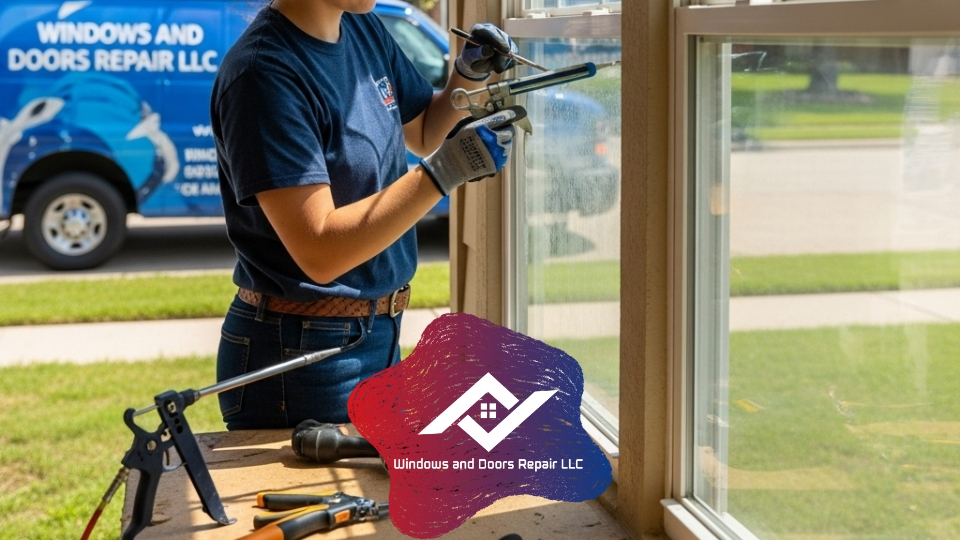
- Weatherproofing and Structural Setting: Replacement glass is set in a a full bed of compatible glazing compound, with exterior and interior silicone beads applied in a continuous, unbroken line. For IGUs, the spacer bar receives a dual-seal application using PIB primary sealant and silicone secondary sealant to meet current energy code performance requirements. All installations include a final calibration of frame hardware, lock alignment verification, and a water infiltration test using a garden hose at low pressure against the exterior of the installed pane.
Cost Variables for Emergency Window Glass Replacement in Houston
Emergency glass replacement costs in the Greater Houston market vary based on glass type, assembly specification, access complexity, and whether the frame requires structural correction before glass installation. The following ranges reflect current market conditions in the DFW and Houston corridor.
- Single-pane annealed glass replacement (standard residential size): $120 to $280, including shard removal and labor. Same-day completion typical.
- Double-pane IGU replacement (standard size, clear glass): $280 to $550, depending on unit thickness (5/8″ vs. 7/8″ overall assembly), spacer material, and argon fill. Low-E coating adds $40 to $90 per unit.
- Shattered patio door glass (tempered, standard 34″ x 76″ panel): $350 to $650 for the glass panel alone; add $80 to $150 for track cleaning and roller assessment during installation.
- Impact-rated laminated glass replacement (coastal Houston compliance): $550 to $1,100 per unit depending on size, interlayer specification, and whether the frame requires reinforcement to accept the additional weight of the laminated assembly.
- Frame squaring and shimming (when foundation shifting has racked the rough opening): $150 to $400 in addition to glass costs, depending on degree of racking and whether siding or interior trim requires adjustment to access the framing.
- Emergency after-hours or weekend service premium: $75 to $150 flat fee above standard rates, applied to calls outside normal business hours.
Homeowners with active homeowner’s insurance policies should document the failure with photographs before any temporary boarding or debris removal. Storm-caused glass breakage (including hail and hurricane-related events) is typically covered under the dwelling coverage portion of a standard HO-3 policy, subject to the deductible. Thermal stress fractures may require a professional damage assessment letter to support a claim, as insurers sometimes dispute non-impact failures.
Frequently Asked Questions Regarding Houston Glass Replacement
How long does it actually take to replace a double-pane window in Houston, from the moment I call to a fully sealed installation?
For standard-size IGUs (units that fall within common residential dimension ranges), same-day or next-day completion is achievable in most Greater Houston neighborhoods. The workflow runs as follows: initial call and dispatch typically places a technician on-site within 2 to 4 hours for emergency calls. Measurement, documentation, and temporary boarding take 30 to 60 minutes. If the glass can be sourced same-day from regional stock (which covers roughly 70% of standard Houston residential sizes), installation occurs on the same visit or the following morning. Non-standard sizes, specialty coatings, or impact-rated assemblies extend the timeline to 1 to 3 business days, during which the temporary board-up is left in place. The total elapsed time from initial call to sealed permanent installation averages 4 to 8 hours for in-stock glass and 24 to 72 hours for custom-fabricated units.
My windows keep cracking with no obvious impact. Could my Houston home’s foundation shifting be the actual cause?
Yes, and this is one of the most consistently underdiagnosed glass failure mechanisms in Greater Houston. When a slab foundation moves differentially (one corner rising or dropping relative to others due to clay soil expansion and contraction), it racks the wall framing. Window rough openings, which are structural interruptions in the framing, absorb a disproportionate share of this racking displacement. The glass pane, which has no meaningful racking resistance, then experiences shear stress transmitted through the glazing channel. The crack typically initiates at a corner of the glass where the racking stress concentrates, and it propagates diagonally. If you have experienced multiple glass failures in the same window or in windows along the same wall line, particularly after periods of extended drought followed by heavy rainfall, foundation-induced racking is a primary suspect. Replacing the glass without addressing the frame plumb condition will produce recurrent failures. A proper diagnostic includes checking both jambs for plumb and measuring the rough opening diagonals before any glass is ordered.
Can I temporarily seal a broken double-pane window myself until a technician arrives, and is it safe to remain in the house?
Temporary self-sealing is appropriate for the security and weather-exclusion function, but it must be done correctly to avoid secondary injury or additional damage. Use rigid foam board (not just plastic sheeting) cut to fit the rough opening and held in place with painter’s tape or wood strips screwed into the window frame’s exterior casing. Do not attempt to remove broken glass yourself without cut-resistant gloves rated A4 or higher. For a double-pane unit where one lite remains intact, treat the remaining pane as structurally unreliable: do not lean against it or apply pressure, and keep the area clear of children and pets. Remaining in the house is generally safe as long as the opening is temporarily sealed against wind and rain, the broken glass is cleared from floor surfaces, and the HVAC system’s return air grilles near the window have been checked and cleared of glass fragments, which can circulate through the duct system if not removed.
Does homeowner’s insurance in Texas typically cover emergency window glass replacement after a hurricane or storm?
Standard Texas HO-3 homeowner’s policies generally cover sudden and accidental glass breakage caused by named perils including windstorm, hail, and hurricane, subject to the applicable deductible and any windstorm exclusions in coastal counties. In Galveston County and some adjacent Harris County ZIP codes, windstorm coverage may require a separate Texas Windstorm Insurance Association (TWIA) policy rather than being included in the standard homeowner’s policy. Thermal stress fractures (cracking without impact) present a more complex claims scenario: most standard policies do not cover gradual deterioration, and insurers may classify thermal stress cracking as deterioration rather than sudden loss. In these cases, a written diagnostic report from a qualified glass technician documenting the failure mechanism can support a claim. Photograph the cracked glass, the surrounding frame, and any visible exterior damage before any repair work begins, and retain all receipts and work orders for the claims process.
What is the service coverage area for emergency glass replacement calls around Houston?
The service area for emergency residential glass replacement covers the full Greater Houston metro, including Houston proper, The Woodlands, Conroe, Spring, Cypress, Katy, Sugar Land, Missouri City, Pearland, League City, Friendswood, Baytown, and Pasadena. For locations within Loop 610 and the Inner Loop neighborhoods (Montrose, Heights, Midtown, Medical Center corridor), response times for emergency calls average 60 to 90 minutes. Outlying areas including The Woodlands and Sugar Land typically see 90 to 120-minute response windows. To confirm response availability for a specific address and get an immediate estimate, contact our emergency response team directly by phone or through the online intake form.